
Global Corridor #10
Geography of the US/Israel War on Iran: Blockade of the Strait of Hormuz, Gulf real estate economy shattered? Oil and gas crisis, data centre wars, Indian investors in Middle East ports

Dear Readers - welcome to the Global Corridor newsletter. This week the illegal US/Israeli attack on Iran opens up a pandora’s box for the region’s logistical and infrastructural operations. In this latest newsletter I try and pull together some of these emerging war-time infrastructure geographies that are rapidly shifting across the region. Things are moving quickly but I hope that there’s some useful resources here. I’ve been out on the streets in Manchester with the anti-war movement and found this piece by Salar Mohandesi important, given he asks “For those of us who live in North America and Europe, what is to be done?”
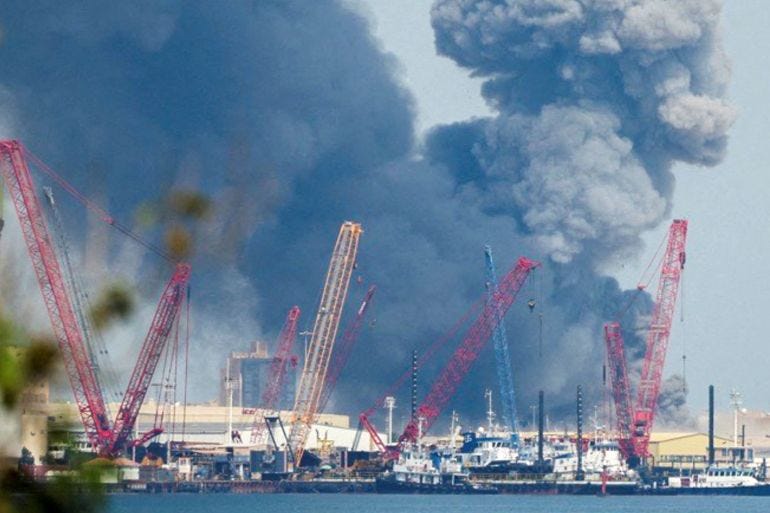
1. Blockade of the Strait of Hormuz
As has been long expected if there was an attack on Iran it has moved towards blockading the flow of maritime traffic through this key artery of the global carbon complex. There’s lots of real time trackers to keep you up to date with the build up of ships in the Persian Gulf.
I’ve found the focus on the insurance industry really interesting, showing that Iran doesn’t need to physically block the Strait but rather make it risky enough for insurers that they refuse to cover shipping. And this seems to be something that the US Government have tried to counter both with military assets and offers of insurance through the United States Development Finance Corporation (an organisation that has been used to push US interests in global infrastructure over recent years such as the Lobito Corridor). As Politico reported Trump has proclaimed through his Trust Social platform:
“Effective IMMEDIATELY, I have ordered the United States Development Finance Corporation (DFC) to provide, at a very reasonable price, political risk insurance and guarantees for the Financial Security of ALL Maritime Trade, especially Energy, traveling through the Gulf
On Thursday, there’s been news that “Insurance offers are being made for vessels seeking to transit the Strait of Hormuz, the Lloyd's Market Association said“ but these are likely to be expensive and sensitive to any kind of military action by Iran as has already been reported.
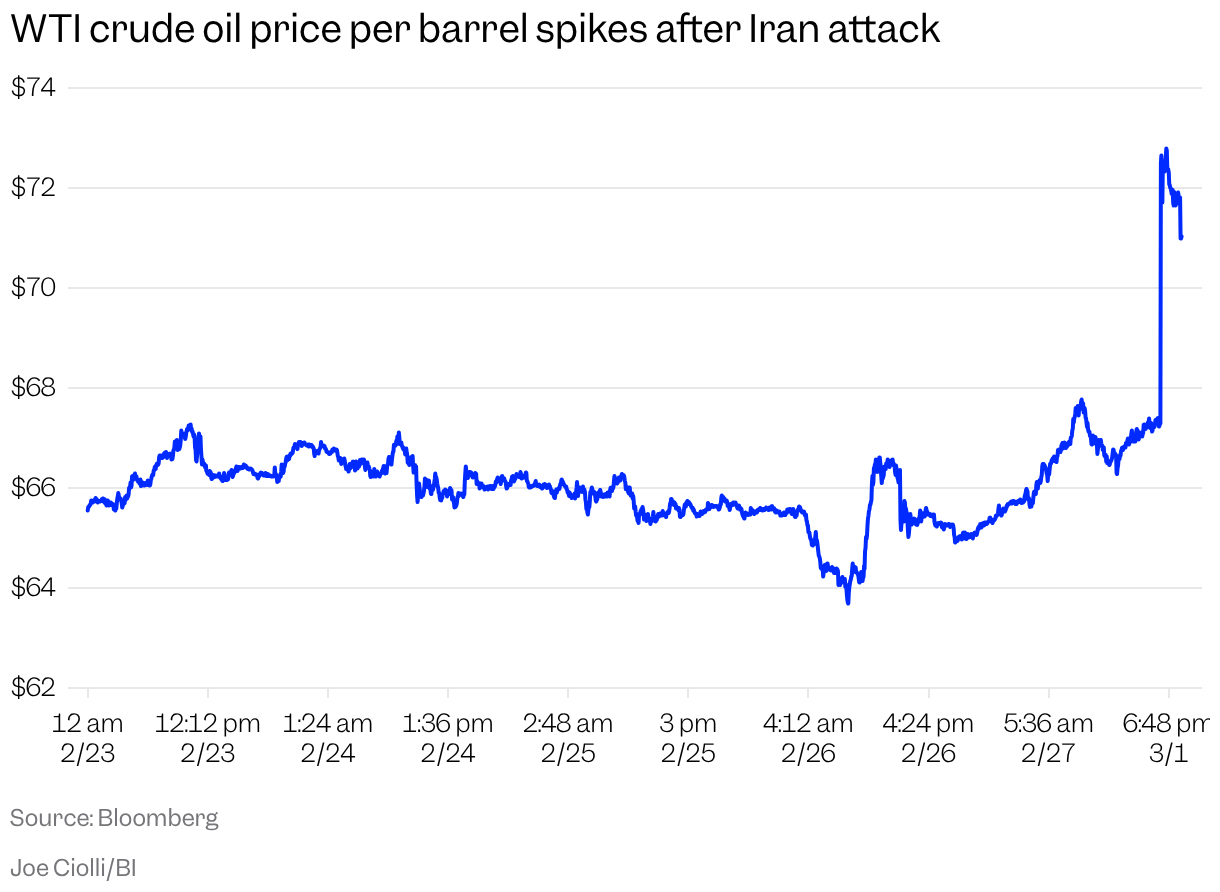
There’s lots of emerging analysis about the rapidly changing situation in the Strait and its impact on the global oil and gas price rises. I found this explainer by Forbes really useful and an opinion piece in the Guardian that argues “A gas shock – not an oil shock – from the Iran war looks more threatening.”
While focus on the implications for oil and gas shipments has taken up much of the media attention, the impact on food security in Gulf Co-operation Council member states appears just as serious. See here a piece on immediate shortages suggesting:
In Qatar, for example, more than 90% of food is imported, with the vast majority arriving by sea. With flights not fully operating across the region, food availability could become a growing concern
Want to know which foods will get pricier? Read this guide by Food Navigator.
There’s another angle to food security that is emerging and covered by the Guardian on the impacts on agricultural production due to disruption of the global fertiliser supply chain. It goes on to suggest
Roughly half of global food production depends on synthetic nitrogen and crop yields would fall without fertiliser. The resulting shortages would push up the prices of household staples such as bread, pasta and potatoes, and make animal feed more costly.
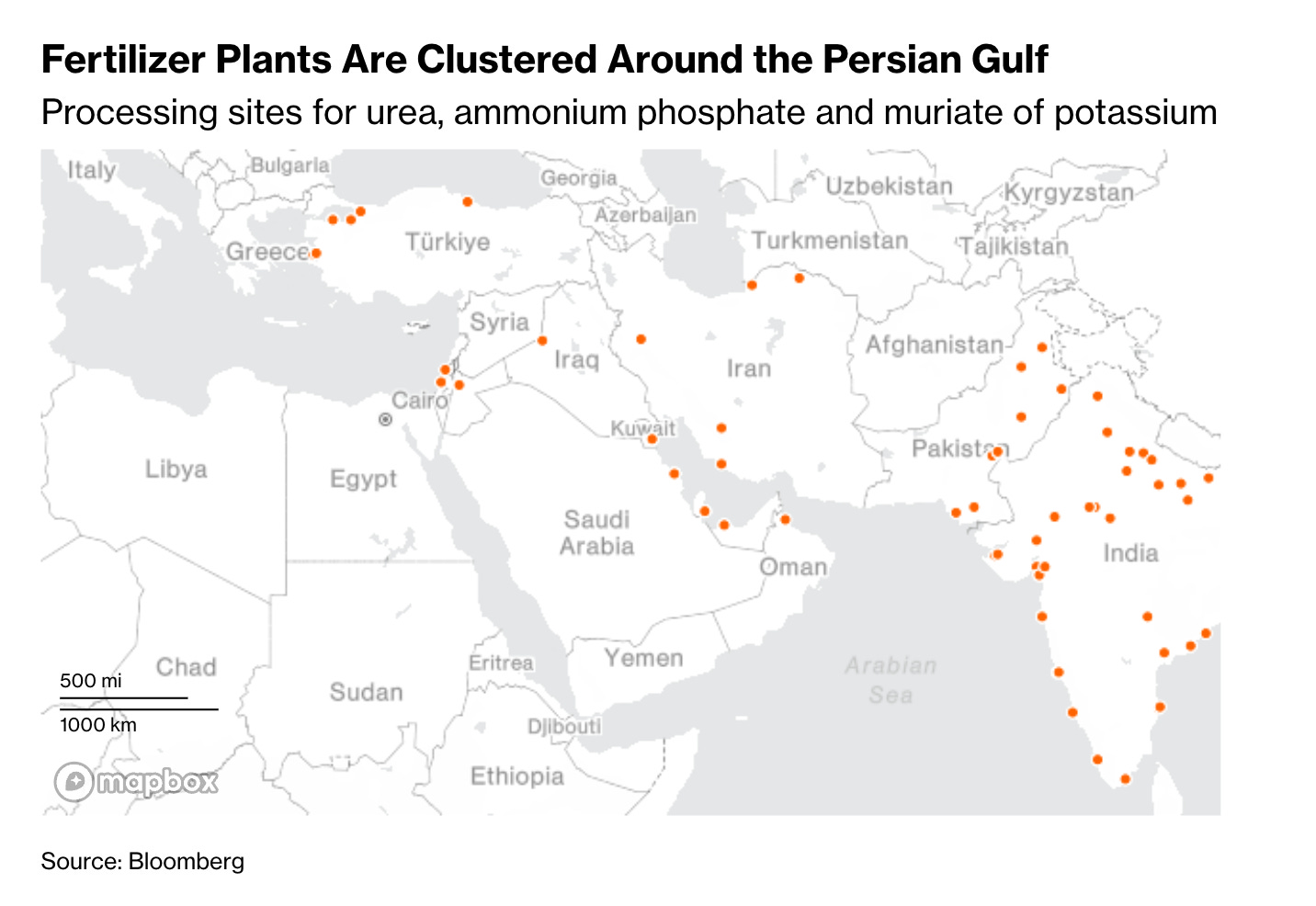
Bloomberg have also covered this question, showing that the Persian Gulf is at the centre of the global network of production for the sector and raising some important concerns about how quickly this might effect food security across the planet.
2. UAE Real Estate Dream Turns to Nightmare
The UAE has built its diversification strategy on real estate and the allure of the property led dream in places such as Dubai and Abu Dhabi. There’s been a massive amount of media coverage in the UK about how the instagram influencers, crypto-traders and others in search of fame and fortune might now be facing a uncertain future given the waves of $40,000 Iranian drones that have been causing damage across the Emirates. Already, the media in the UK is debating whether British citizens that have enjoyed the tax ‘perks’ of the UAE should pay for their own rescue rather than costing the public purse.
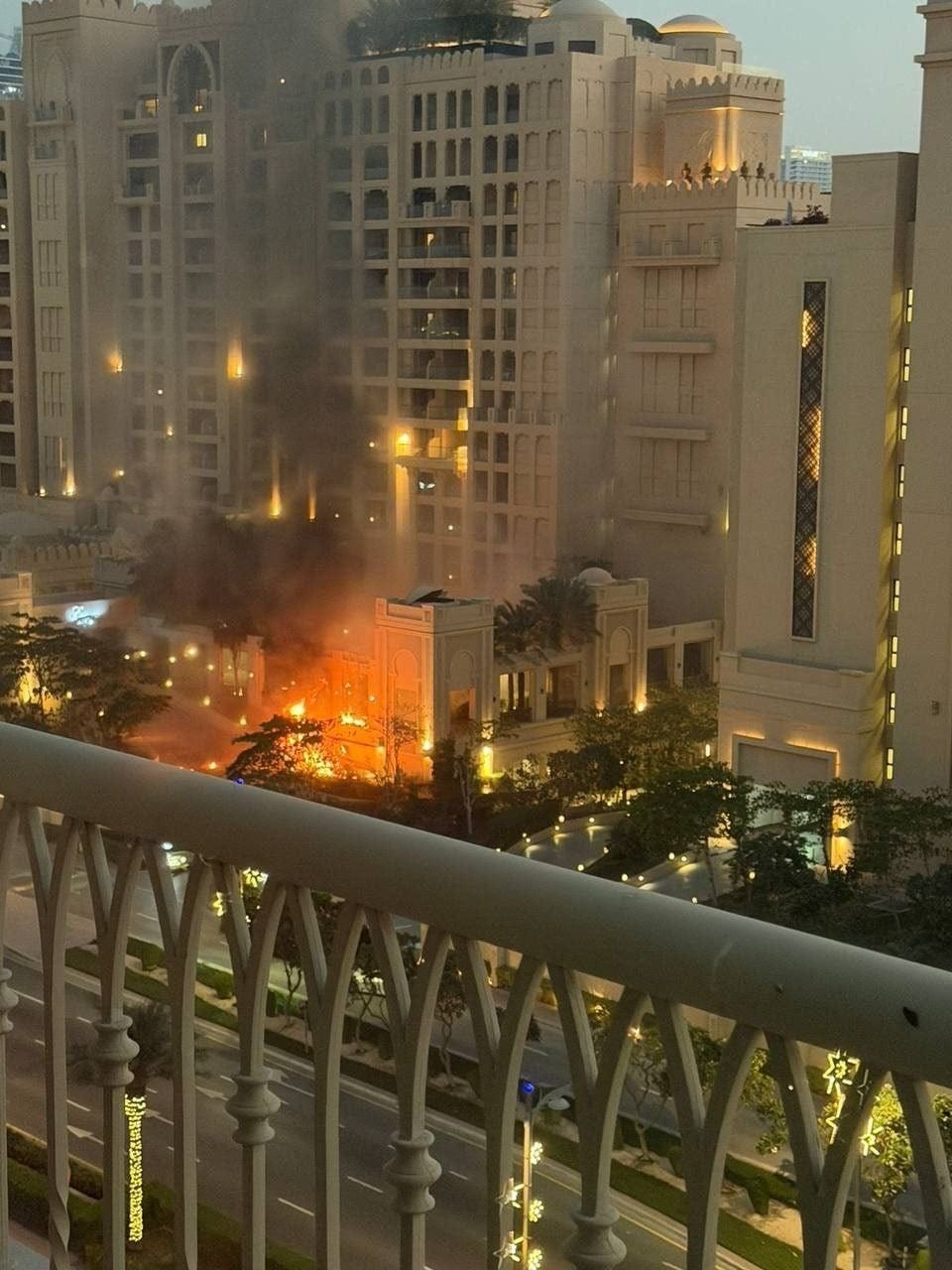
The Economist offers a different media narrative beyond the focus on minor celebrities by exploring whether Dubai, the heart of the UAE property dream can keep people and investors coming:
The question is whether the people and money that have fuelled Dubai’s rise as a global business hub will keep coming as they did before.
There’s a great real time tracker available here with an data interface showing collapsing real estate prices in Dubai (5-15%) and Abu Dhabi (3-10%).
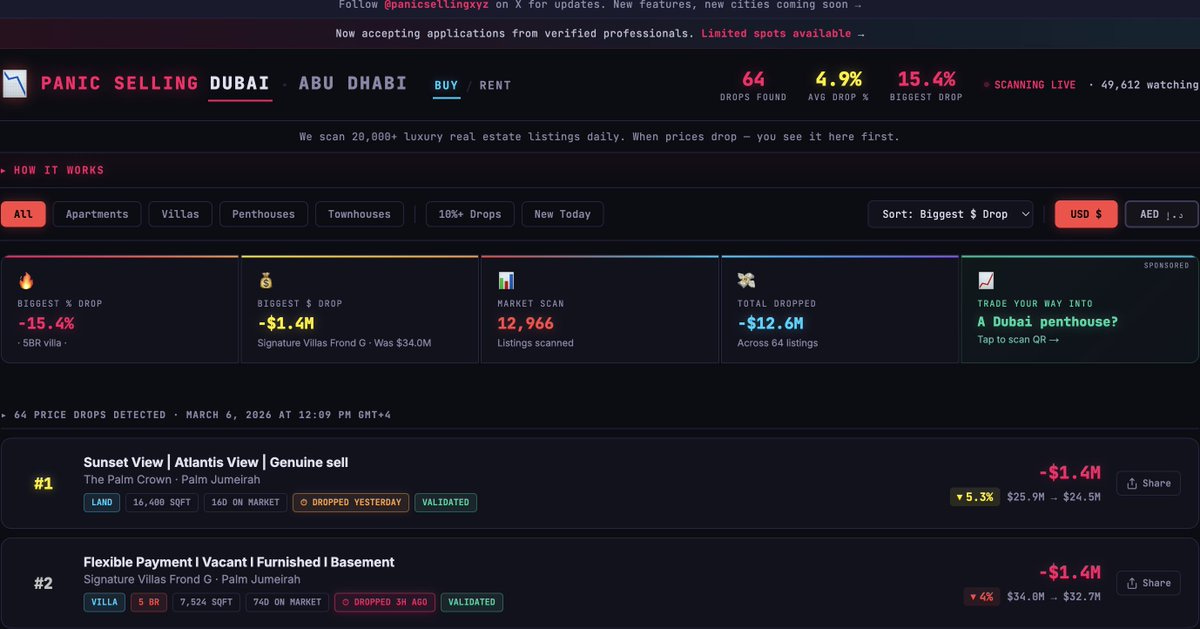
Allows you to pinpoint particular properties as well as aggregate. For instance….
ArtHouse, Saadiyat (under construction) in Abu Dhabi
$4.2M → $3.8M
-$408K drop
▼9.7%

3. Oil + gas infrastructure
It’s not just the Strait of Hormuz that poses potential challenges for the future of the oil and gas infrastructure and global prices. The ‘hard’ infrastructure of refineries, pipelines and port terminals offer multiple targets that could cause catastrophic global reverberations. For instance a report by Middle East Eye has suggested that Iran is signalling it may strike the Baku-Tbilisi-Ceyhan pipeline.
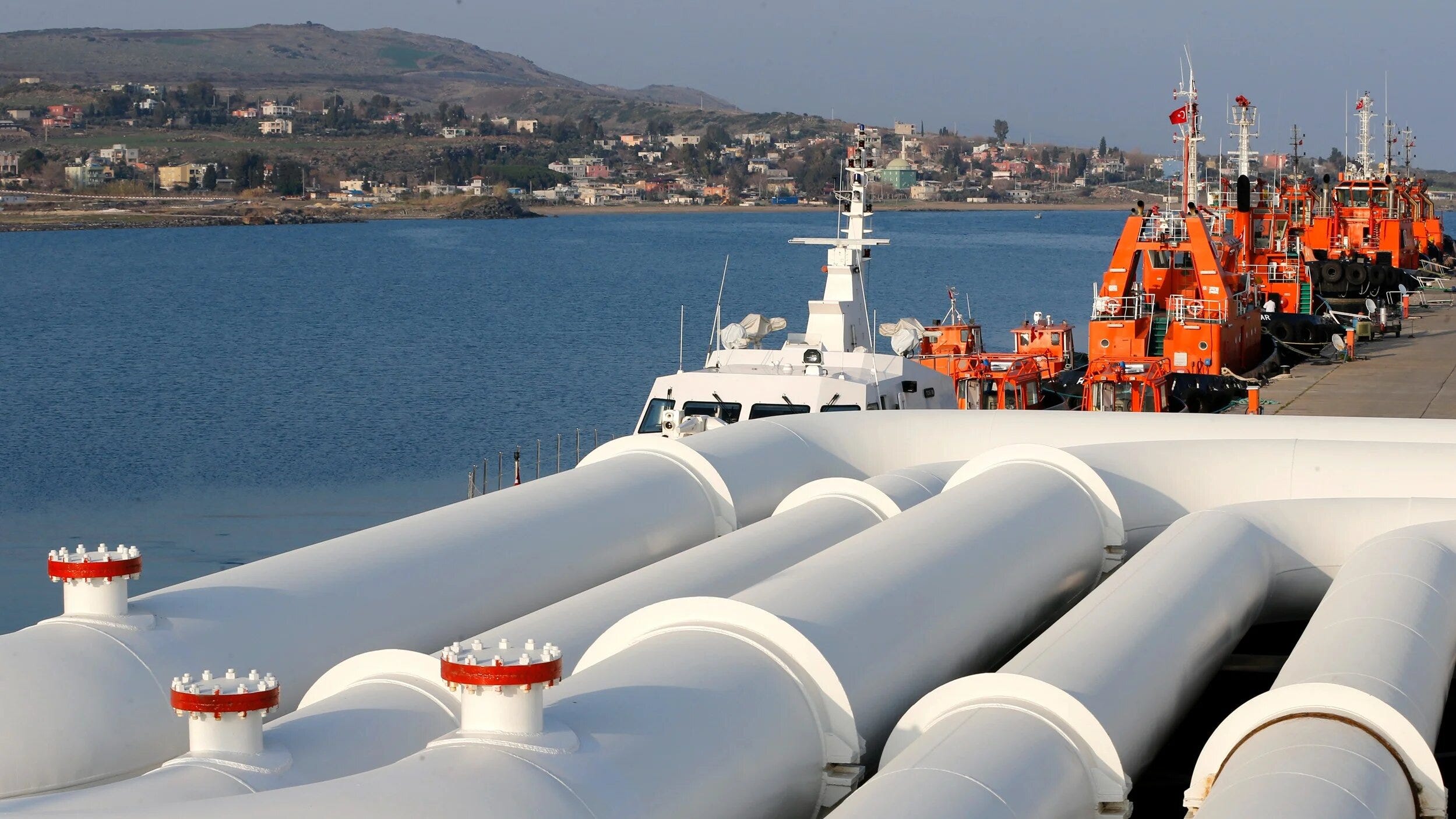
And there is growing evidence despite information black outs by authorities that this infrastructure is being attacked. The Wall Street Journal reports on an attack in Saudi Arabia;
Ras Tanura, the site of an oil refinery and the world’s biggest offshore oil-loading facility, first came under attack on Monday, forcing a temporary halt to operations. That drone strike caused a small fire that was brought under control, the officials said.
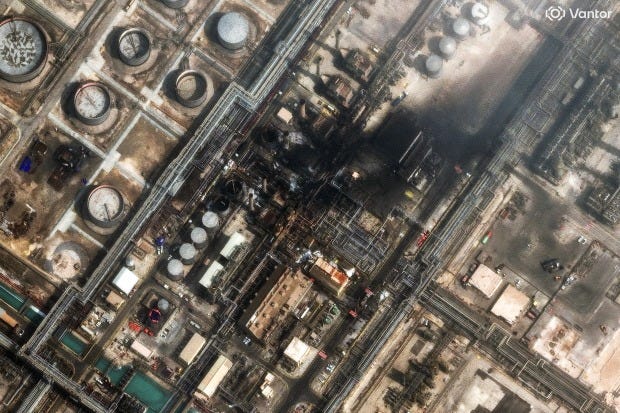
Like the responses from the insurance industry with shipping the risk of attack rather than physical damage per se seems enough to have closed down operations. Al Jazeera reports that:
The world’s largest LNG producer said in a statement on Monday “Due to military attacks on QatarEnergy’s operating facilities in Ras Laffan Industrial City and Mesaieed Industrial City in the State of Qatar, QatarEnergy has ceased production of liquefied natural gas (LNG) and associated products,”
Media groups have noted that while this leaves much of Asia and Europe facing massive price hikes, US capital is already benefiting from these price rises with “Shares of Cheniere and Venture Global, the two biggest U.S. producers, have surged about 7% and nearly 24%, respectively, this week after Qatar’s production went offline.”
4. Data Centre Wars
It seems that data centres have now become a frontline infrastructure, critical to military operations by the US and Israel and therefore a clear target for those involved in the war. Simply put there’s a logic to ‘destroy the data centre, to destroy the cloud, to destroy the capacity of the enemy to operate’. We know that the US corporate digital interests and war effort are intricately connected. For instance, Microsoft is a major cloud provider for the US military, primarily through the Azure Government cloud and the Joint Warfighting Cloud Capability (JWCC) contract, which is a $9 billion, multi-vendor deal awarded in 2022. The partnership involves hosting sensitive, unclassified, and classified data for the Department of Defense (DoD), including support for AI, tactical edge computing, and, in some cases, logistics for combat systems
And so it was not so much of a surprise to see data centres become key targets. As the BBC reports:
Amazon's cloud computing business says drones have hit three of its facilities in the United Arab Emirates (UAE) and Bahrain following US and Israeli strikes against Iran at the weekend.
It goes on to speak to Vili Lehdonvirta, professor of technology policy at Aalto University who suggests that the attacks appear:
to be the first time such cloud infrastructure had been “knocked down by military action”.He said this was “not entirely unexpected” as with many governments and firms using a small number of large cloud providers, their data centres have become “attractive targets to anyone seeking to disrupt a country”.
“Also, given how US and allied military forces increasingly use cloud and commercial AI as part of their operations, it is not entirely unexpected that adversaries might start to target these infrastructures as “dual-use” facilities,” he added.
And to give further evidence of data centre wars there’s a report here about how US and Israel have also been targeting these infrastructure sites in Tehran.
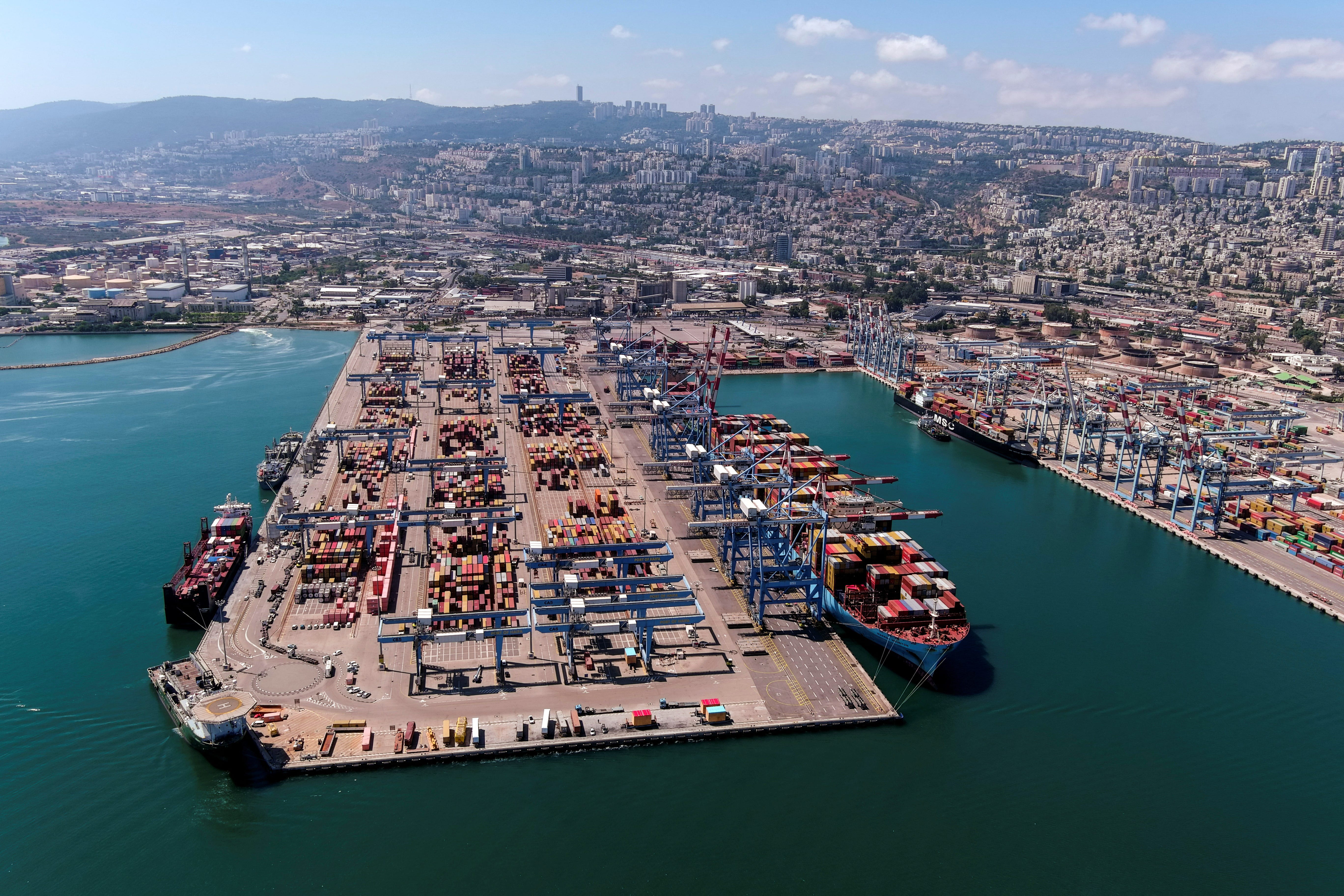
5. Indian Exposure to Port attacks
Escalating security risks around Middle Eastern ports are raising questions for Indian investors and logistics planners. The Port of Haifa is owned by a consortium led by India's Adani Ports & SEZ Limited (70%) and Israel's Gadot Group (30%). They purchased the port for $1.15 billion in January 2023 as part of Israel's privatisation of its port infrastructure. The reported attacks on the port must be making investors nervous about its future. And that is not the only investment that leaves Indian port interests exposed. The National Investment and Infrastructure Fund (NIIF) acquired a 22.5% stake in DP World’s UAE-based Hindustan Ports Private Limited in 2022 for approximately $300 million integrating the Indian maritime economy into the fortunes of these Gulf ports that now face drones attacks. In a previous newsletter I discussed the Indian Middle East Europe Corridor (IMEC) that since its announcement in October 2023 has been riven with geo-political shocks and now faces an even more uncertain fate.
6. More Reading
Finally, if you manage to find time to move away from the screen and the non-stop news there’s a few books that I recommend to help make sense of rapidly changing events.
Iran Between Two Revolutions by Ervand Abrahamian
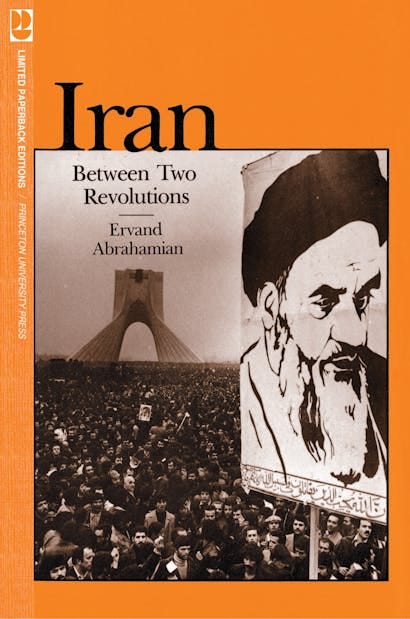
Emphasizing the interaction between political organizations and social forces, Ervand Abrahamian discusses Iranian society and politics during the period between the Constitutional Revolution of 1905-1909 and the Islamic Revolution of 1977-1979. Presented here is a study of the emergence of horizontal divisions, or socio-economic classes, in a country with strong vertical divisions based on ethnicity, religious ideology, and regional particularism. Professor Abrahamian focuses on the class and ethnic roots of the major radical movements in the modem era, particularly the constitutional movement of the 1900s, the communist Tudeh party of the 1940s, the nationalist struggle of the early 1950s, and the Islamic upsurgence of the 1970s. In this examination of the social bases of Iranian politics, Professor Abrahamian draws on archives of the British Foreign Office and India Office that have only recently been opened; newspaper, memoirs, and biographies published in Tehran between 1906 and 1980; proceedings of the Iranian Majles and Senate; interviews with retired and active politicians; and pamphlets, books, and periodicals distributed by exiled groups in Europe and North America in the period between 1953 and 1980.
Crude Capitalism: Oil, Corporate Power, and the Making of the World Market by Adam Hanieh
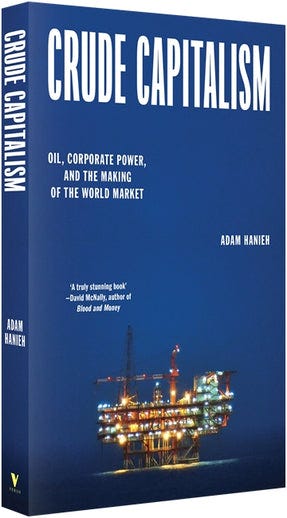
This expansive history traces the hidden connections between oil and capitalism from the late 1800s to the current climate crisis. Beyond simplistic narratives that frame oil as ‘prize’ or ‘curse’, Crude Capitalism uncovers the surprising ways that oil is woven into the fabric of our modern world: the rise of an American-centered global order; the breakdown of Empire and anti-colonial rebellion; contemporary finance and US dollar hegemony; debt and militarism; and the emergence of new forms of synthetic consumption. Much more than an energy source or transport fuel, oil has a foundational place in all aspects of contemporary life - no challenge to the fossil fuel industry can be effective without taking this fact seriously. Crude Capitalism maps the varied geographies of oil, including the rise of OPEC, the importance of revolutionary and Post-Soviet Russia, the crucial role of African upstream reserves, and the new petrochemical circuits that link the Middle East, China, and East Asia. The book provides an original and fine-grained empirical analysis of corporate ownership and control, including refining and petrochemicals. By exposing these structures of power and placing oil in capitalism, the book makes an essential contribution to debates around oil-dependency and the struggle for climate justice.
Sinews of War and Trade: Shipping and Capitalism in the Arabian Peninsula by Laleh Khalili
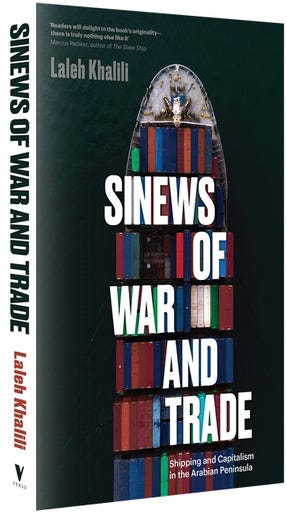
On the map of global trade, China is now the factory of the world. A parade of ships full of raw commodities—iron ore, coal, oil—arrive in its ports, and fleets of container ships leave with manufactured goods in all directions. The oil that fuels China’s manufacturing comes primarily from the Arabian peninsula. Much of the material shipped from China are transported through the ports of Arabian peninsula, Dubai’s Jabal Ali port foremost among them. China’s ‘maritime silk road’ flanks the peninsula on all sides.
Sinews of War and Trade is the story of what the making of new ports and shipping infrastructure has meant not only for the Arabian peninsula itself, but for the region and the world beyond. The book is an account of how maritime transportation is not simply an enabling companion of trade, but central to the very fabric of global capitalism. The ports that serve maritime trade, logistics, and hydrocarbon transport create racialised hierarchies of labour, engineer the lived environment, aid the accumulation of capital regionally and globally, and carry forward colonial regimes of profit, law and administration.