
Global Corridor #9
New Horn of Africa corridor, the 'Lobito model', Alphabet's digital $15 billion investment in India, EXIM Bank's outstanding $289bn loans, new maritime based readings, data centre film...

Dear Readers - welcome to the Global Corridor newsletter. The world is experiencing massive restructuring of its economy, territory and technologies through new global infrastructure projects. Many of the investments in new railways, data-centres, real estate developments, port expansions, special/extractive zones, highways, and more are proceeding through transnational, multi-modal corridors. We are seeing the making of a new global geography at an unprecedented pace and scale. I’ll be providing a round up of some of the most interesting news, stories, data, opinion + academic work that can help us make better sense of this transforming world, including news from my own project.
1. Global Infrastructure News Briefing:
A round up of some of the biggest news on global infrastructure projects and emerging implications:
Djibouti, Ethiopia, South Sudan, Uganda establish trade corridor authority
Djibouti, Ethiopia, South Sudan and Uganda have formally launched a joint body to oversee one of the Horn of Africa’s newest integration projects, signalling a renewed push to streamline inland access to global shipping lanes and reduce the region’s chronic trade bottlenecks. The four governments agreed this month to establish the Djibouti-Ethiopia-South Sudan-Uganda (DESSU) Corridor Authority, mandated to coordinate transport, customs and infrastructure development along a route linking landlocked economies to the Port of Djibouti. Ministers say the framework will supervise planning, investment and operations while deploying digital logistics systems intended to cut transit times and costs across borders. The initiative builds on earlier memoranda and technical discussions among the countries aimed at strengthening regional integration through shared infrastructure and trade facilitation.
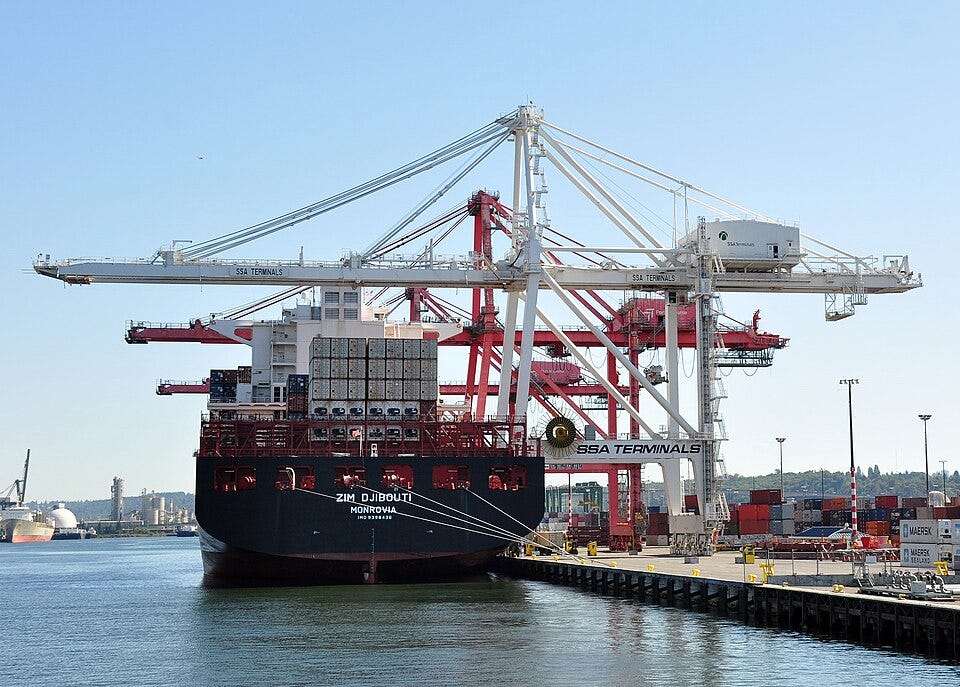
Once (if?) operational, the corridor is expected to open new commercial arteries across the Horn and eastern Africa, enhancing mobility and economic links between the participating states. For Ethiopia and South Sudan, both landlocked, access to reliable maritime routes has become a strategic priority, with Addis Ababa seeking to secure long-term sea access to sustain industrial growth and logistics reforms. Earlier corridor concepts envisioned multimodal links combining road transport with river and dry-port infrastructure to connect inland production zones to Djibouti’s ports. Backers frame the authority as part of a broader continental shift toward cross-border infrastructure aligned with the African Continental Free Trade Area, aiming to lower transport costs, ease delays and stimulate post-conflict recovery in fragile markets. The project also reflects intensifying geopolitical competition around Red Sea gateways and logistics networks, where commercial and strategic interests increasingly intersect with the presence of militaries from across the world.
How the ‘Lobito model’ acts as a framework for US designs in Africa
A recently published report by the Atlantic Council’s ‘Africa Center’ (a US-based think tank founded in 1961 that promotes transatlantic cooperation, NATO, and US global leadership) offers some important indications of the direction of US travel in Africa’s reshaping through new corridor investment. The report, ‘Mining corridors as catalysts for US-African partnerships: Building on the Lobito model’ argues that;
Logistic corridors and processing hubs are the way forward. Corridor projects that integrate mining operations with transportation networks and energy systems offer the most promising pathway to unlock African critical mineral wealth at scale. These corridors reduce logistics costs, deepen regional integration, create employment opportunities, and advance economic diversification.
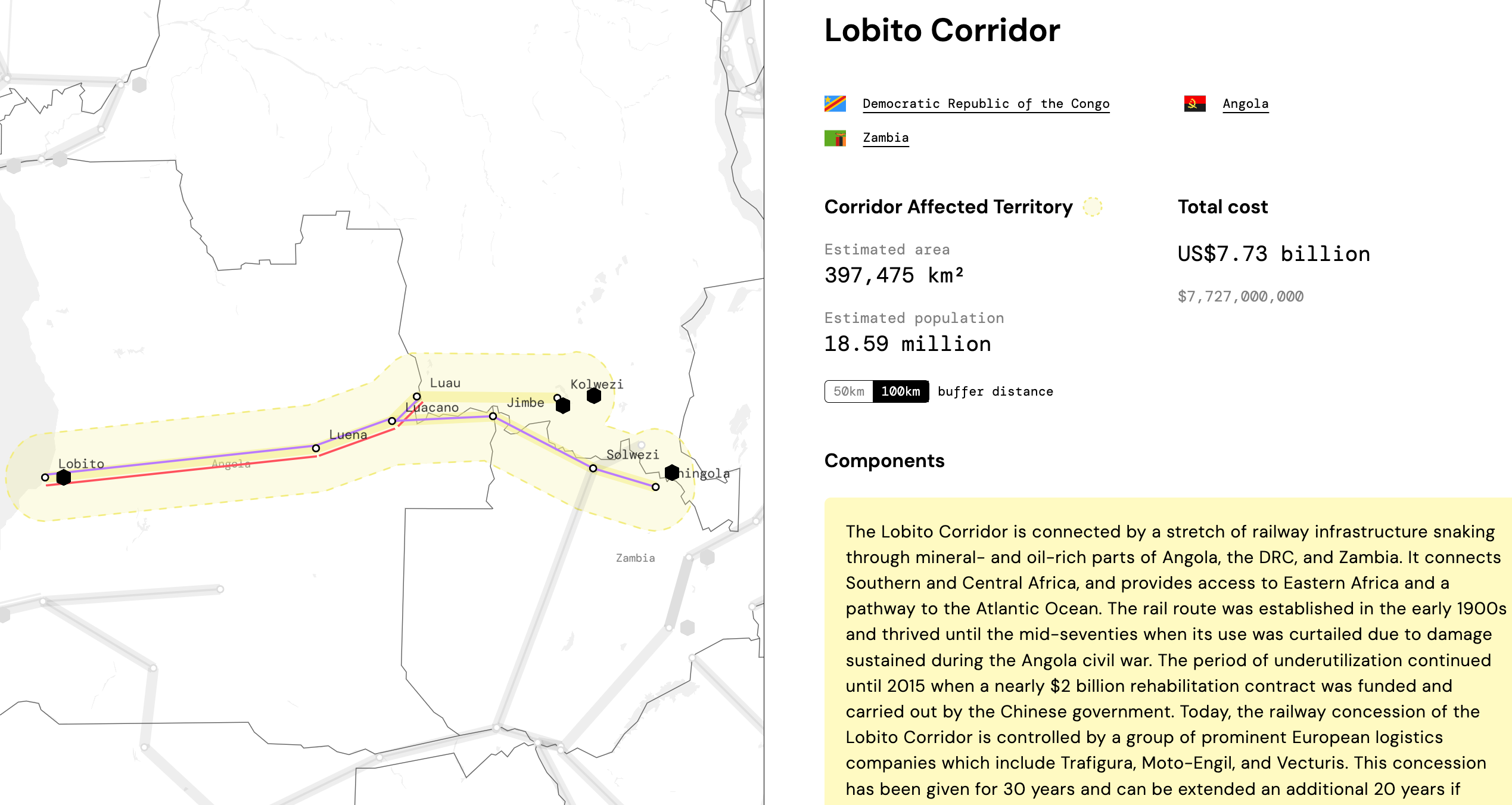
This growing realisation in DC that access to rare earth minerals in Africa requires control and therefore investment over large infrastructure corridors is shaping a new approach that is likely to see other investments and partnerships coming soon. For instance the FT recently covered attempts by an American company to establish control and access to mineral resources in Guinea through a proposed ‘Liberty Corridor’ in Libera. Clearly the investment into Lobito is being positioned as a model to be rolled out elsewhere to counter China’s influence with the report arguing:
This model can be replicated through four additional mining corridors and hubs. These include the proposed Liberty Corridor connecting Guinea’s iron ore belt to Liberia’s coast; the Northern Corridor linking Kenya’s port of Mombasa to landlocked East African states and eastern DRC via a multimodal network; the Nacala Corridor, which connects northern Mozambique to Malawi and Zambia through rail, road, and the Port of Nacala; and Morocco’s emergence as a near-term mineral processing and manufacturing hub, particularly for battery supply chains. Together, these projects have the potential to deepen US-Africa partnerships, strengthen supply chain resilience, counter Chinese influence, and advance sustainable development.
EXIM Bank’s US$289 billion outstanding on Belt And Road Loans
China’s state-owned Export-Import Bank has amassed more than $289bn in outstanding loans tied to the Belt and Road Initiative (BRI), underscoring both the vast reach of Beijing’s development finance and the shifting risks now emerging as repayments peak. The lender held over Rmb2tn ($289bn) in BRI-related credit as of the end of January, spanning more than 130 countries and funding projects from transport infrastructure to advanced manufacturing and green development, according to official data reported by state media. The figures offer one of the clearest snapshots yet of the financial scale behind President Xi Jinping’s signature foreign-policy programme, launched in 2013 to link Asia with Europe and subsequently expanded across Africa, Oceania and Latin America through corridor focused investments. Trade integration has grown alongside lending. China’s goods trade with BRI partners reached Rmb22.1tn ($3.07tn) in 2024, reflecting deepening commercial ties that Beijing argues are central to shared industrial development. Yet the lending surge of the 2010s is giving way to a more complex phase defined by debt servicing and restructuring pressures. About 75 developing countries were expected to make a record $22bn in repayments to China in 2025, highlighting Beijing’s transition from capital provider to major debt collector. This might mark a significant pivot from the era of mega project infrastructure finance towards smaller, more targeted engagements as China recalibrates risk and return, as emerging evidence in Latin America suggests.
Alphabet bets on India with subsea cable and $15bn AI hub\
Alphabet is stepping up its infrastructure ambitions in India with the launch of “America-India Connect”, a subsea cable programme paired with a $15bn artificial-intelligence hub in the eastern port city of Visakhapatnam, as the US technology group deepens its push into global AI capacity. Announced by chief executive Sundar Pichai at an AI summit in New Delhi, the initiative will lay new undersea fiber routes linking India with the US and other regions, strengthening data flows needed to support cloud computing and AI workloads. The cables are intended to expand capacity, diversify routes and reduce network risk as demand for AI services accelerates worldwide.
At the centre of the strategy is a planned AI and data-centre campus in Visakhapatnam, backed by roughly $15bn of investment over five years and designed to deliver gigawatt-scale computing power. The facility will anchor new cable-landing stations and digital infrastructure, positioning the coastal city as a major connectivity gateway alongside established hubs such as Mumbai and Chennai.

Alphabet frames the twin projects as long-term “foundational infrastructure” to support AI model training, deployment and research across both public and private sectors. India’s vast internet user base and engineering talent make it an attractive investment space in the emerging AI economy. The move highlights again (as covered repeatedly in this newsletter) how companies such as Alphabet are investing not only in algorithms but also in the physical networks and energy-intensive data centres required to sustain the next phase of AI competition.
2. Featured Image: The Jetty at Jinja
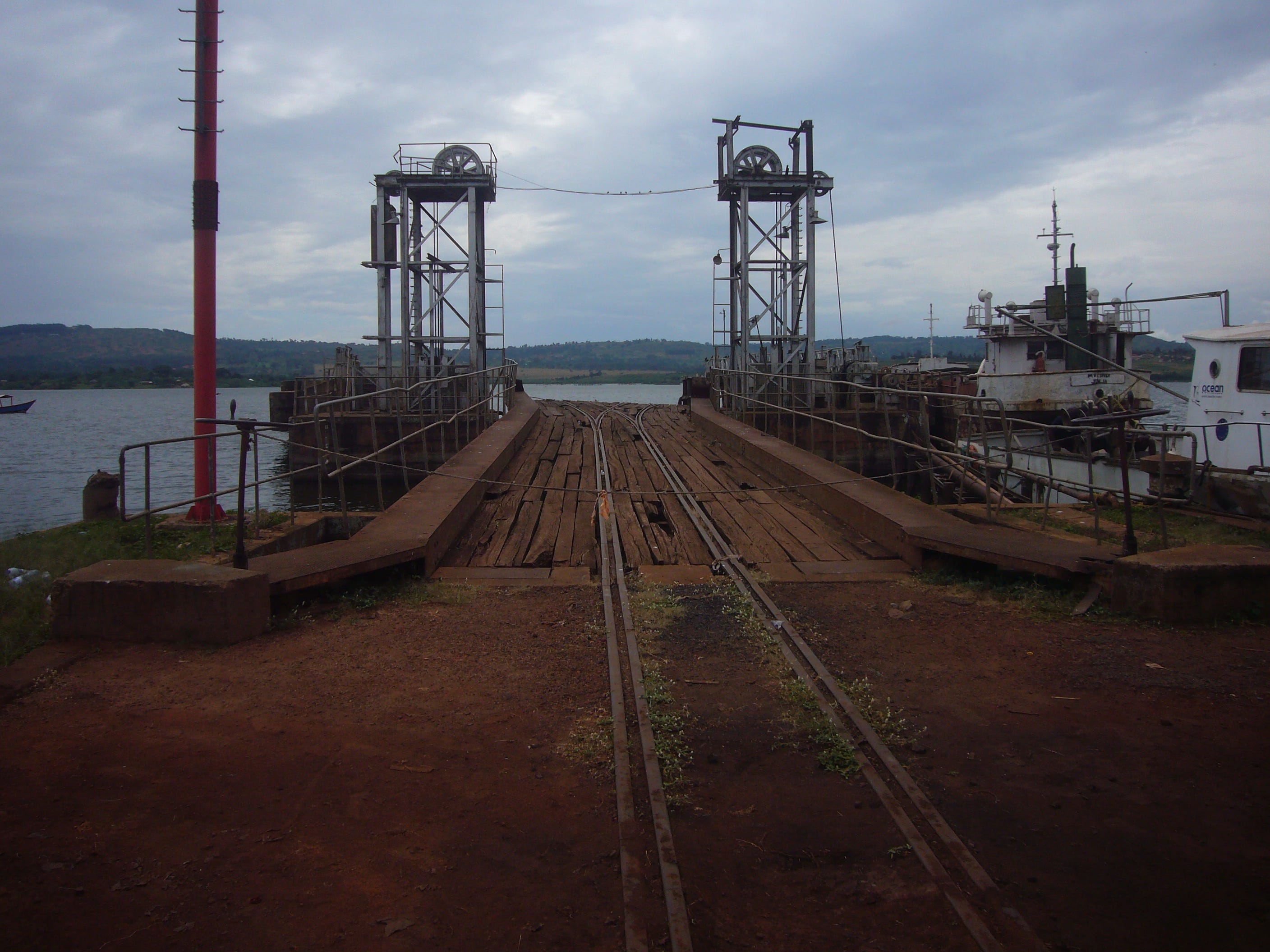
Looking out of the Jinja Port jetty. Jinja developed as a strategic inland port in the late 19th and early 20th centuries, when British colonial authorities identified its location at the source of the River Nile on the northern shore of Lake Victoria as ideal for trade and transport. Linked to the interior by the imperial railway and steamer routes, it became a key transshipment hub for cotton, coffee and other exports moving through Uganda. The port expanded alongside the construction of the Nalubaale Dam in the 1950s, reinforcing Jinja’s role as both an industrial centre and a gateway for regional commerce. (Photo: J:Silver)
3. Global Infrastructure on Film: Exposing The Dark Side of America's AI Data Center Explosion
The explosion of AI across every industry has seen hundreds of water- and power-hungry server farms sprout up across the US. Already, one-third of the world's internet traffic flows through data centers in just one US state: Virginia. However, until now, there has been no official record of the number of data centers in America, who owns them, or how much electricity they consume. In an exclusive deep dive into the industry, Business Insider reporters cracked the code and, for the first time, revealed the true cost of the data warehouses feeding our growing appetite for cloud computing and AI. We travelled to Virginia to meet people living in the shadow of 80-foot-high boxes that emit a constant drone, and to the drought-ridden state of Arizona, where some data centers are using as much as a million gallons of water a day to help cool their computer servers. Business Insider also discovered that the power needs of data centers have forced some states to withdraw from their carbon emissions targets. Power companies are even looking to extend the life of coal and gas plants to help meet the unprecedented demand.
4. New Academic Papers on Global Infrastructure
Featuring a selection of new academic papers covering various types of scholarship on global infrastructure with a focus in this issue on all things maritime…
Shifting sands and ecological uncertainties: An urban political ecology of dredging in Mombasa by Louis Cyuzuzo in Environment and Planning E
This article analyses the 2019 dredging operations conducted as part of the Mombasa Port Development Program (MPDP) and focuses on the political-ecological conflicts generated by this flagship project of Kenya’s Vision 2030. Adopted in cooperation with the Japan International Cooperation Agency (JICA), the MPDP aims to adapt to rapidly evolving global logistics standards and reinforce Mombasa Port’s position as a leading regional logistics hub. The article highlights how the extraction of offshore sand along the southern coast of Mombasa for land reclamation has generated important ecological uncertainties around dredging’s impacts on coastal ecosystems and local livelihoods. It demonstrates how these uncertainties became eminently political as they were reframed through dominant planning paradigms, leading to eventual contestations by marginalized and peripheral actors in Mombasa when expert narratives revealed their limits and biases. I highlight how, fundamentally, this process crystallized an epistemic rift between different actors and social groups with variegated socio-spatial trajectories and uneven political-economic power, resulting in conflicting representations of coastal environments. The article emphasizes two main conflicting representations of coastal landscapes that underpin this rift: one favored by powerful domestic and foreign actors who frame coastal areas as exploitable spaces of logistics circulation and the other emerging from peripheral and marginalized communities in the city who perceive coastal areas as endangered spaces of preservation.
Why Ports Matter to Cities: Understanding the Importance of Logistics-Led Urbanism by Tony Nikolovski + Alan Wiig in Geography Compass
Ports facilitate vital global trade, operating as foundational linkages in the economic circulation through which nearly all consumer products pass. However, there is a need to conceptualize the local implications of these globalized networks. As international trade has intensified over the last few decades, the current international order has seen significant uncertainty due to both geopolitical turbulence and the lingering supply chain disruption from the COVID-19 pandemic. By focusing on the relationship between cities, ports, and their surrounding regions, this review situates the interlinked geographies through which global trade has continuously transformed various places. Earlier scholarship discussed ports as primarily commercial nodes responsible for economic prosperity. This paper highlights the importance of studying logistics-led urbanism through ports’ role as central nodes in urban redevelopments, global supply chain disruptions, climate change impacts, and geopolitical tensions. We argue that logistics-led urbanism reconfigures the 21st-century city through transformations of infrastructure, labor, capital, and territory. We draw on frameworks that treat ports as contested, strategic, and deeply political spaces, and conclude with suggestions for a future port-city research agenda in an emergent era of economic and climatic uncertainty.
The generative power of suspension in large-scale infrastructure projects: Insights from the Port of Trieste, Italy by Leonardo Ramondetti in Environment and Planning E
This article explores the generative role of suspension in large-scale infrastructural projects. While dominant narratives tend to categorise halted or incomplete projects as failures or stalls, this study reframes infrastructural suspension as a productive condition capable of catalysing urban transformations. This issue is examined drawing upon the case of Trieste, Italy, a port city involved in a variety of large-scale infrastructural projects, such as the Belt and Road Initiative and the India-Middle East-Europe Economic Corridor. Despite the volatility of these initiatives – whether they will ever materialise is unknown, fluctuating investment flows, strategic ambiguity and delayed execution are creating new spatial and economic configurations. In this context, widening development trajectories and unpredictable shifts are producing a state of constant becoming, generating conflicts and complicating efforts to coordinate and govern urban transformations. By foregrounding these dynamics, the article contributes to debates on infrastructure-led urbanisation by expanding understandings of megaprojects in flux and highlighting the value of long-term, place-based research to capture the unforeseen urban transformations they engender. In sum, it calls for a reframing of spatial planning: from the management of linear trajectories to a critical engagement with uncertainty that keeps urban futures open and negotiable.
Visualising the ‘Belt and road initiative‘: China’s transport future reflected through its history by Christiaan De Beukelaer & Jan Baetens in Maritime Studies
Xi Jinping’s Belt and Road Initiative frames China’s engagement with the world through trade and diplomacy. Hailed as a twenty-first century Silk Road, the initiative connects China to its trading partners across land and sea. Though it also serves as an engagement with the world at large, including ordinary citizens, among whom the readers of the anglophone China Daily. On the 5th of December 2019, this newspaper printed one of many “Public Interest Ads” promoting its logistical connection to the world as a driver of “Peace and Cooperation”. This article analyses the visual depiction of two mirrored ships on the advertisement. First, by reflecting on the tension between past and present depicted through an analysis of the image as an independent cultural item. Second, by contextualising the image and its meaning in the broader, considering political and ecocritical aspects of this image. In doing so, the article sheds light on the Barthesian mythology that underpins the visual connection between past and present – with an eye on the future.
Project News: New paper in IJURR ‘EVERYTHING IS BEING DISTURBED’: Unsettling the Spaces of Global Infrastructure along the Northern Corridor’
We’ve just published a paper in the International Journal of Urban and Regional Research as part of our GlobalCORRIDOR work in East Africa. Working with Sydney Nsubuga over the last few years we’ve been looking at new global infrastructure investments in eastern Uganda.
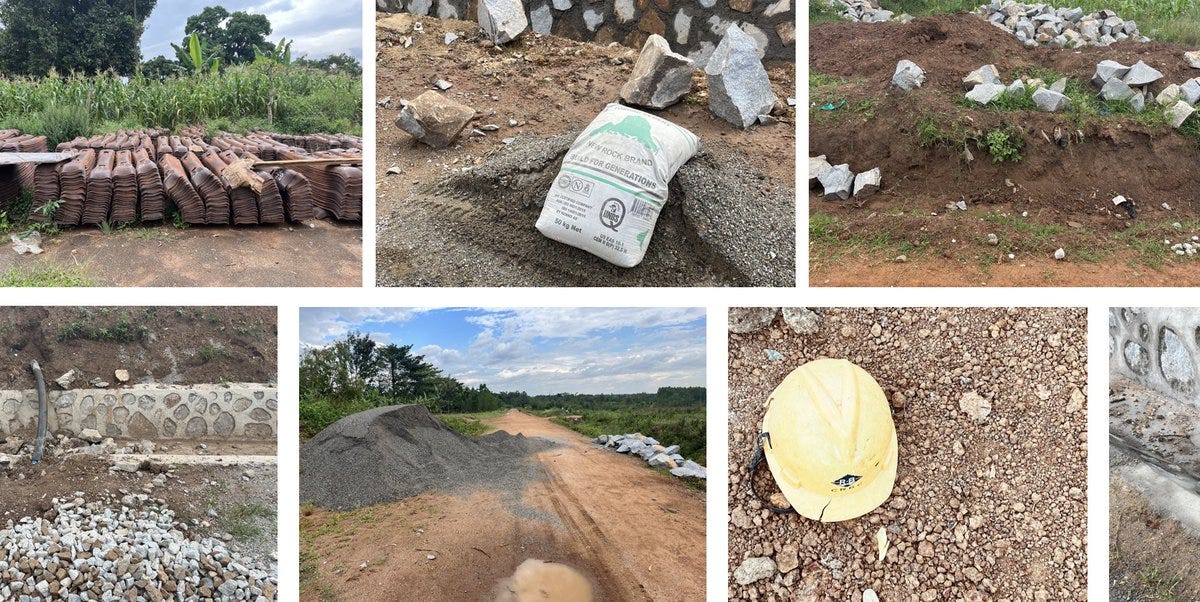
Examining the ways through which global infrastructure projects proceed remains a challenging task given the scale, intensity and speed of these initiatives. This article argues for understanding these transformations through a research approach built around the idea of unsettlement. This is mobilized in three ways: first, to act as a conceptual orientation that is relational and plural in outlook when addressing transforming urban- regional geographies; second, through a methodological approach to research otherwise, that ‘follows the global infrastructure project’, identifying how all kinds of disparate but connected geographies become unsettled; third, through an analytical approach that develops from thick description made in piecing together the (empirical) conditions of unsettlement. This aims to weave together insights across various analytical registers such as the political-economic, social and ecological. Our findings emerge from two projects underway in eastern Uganda as part of the Northern Corridor: the rehabilitation of the Northern Spur railway and the establishment of the Sino-Ugandan Industrial Park.